WELCOME TO THE
TIGER AND DAISIES SHOW
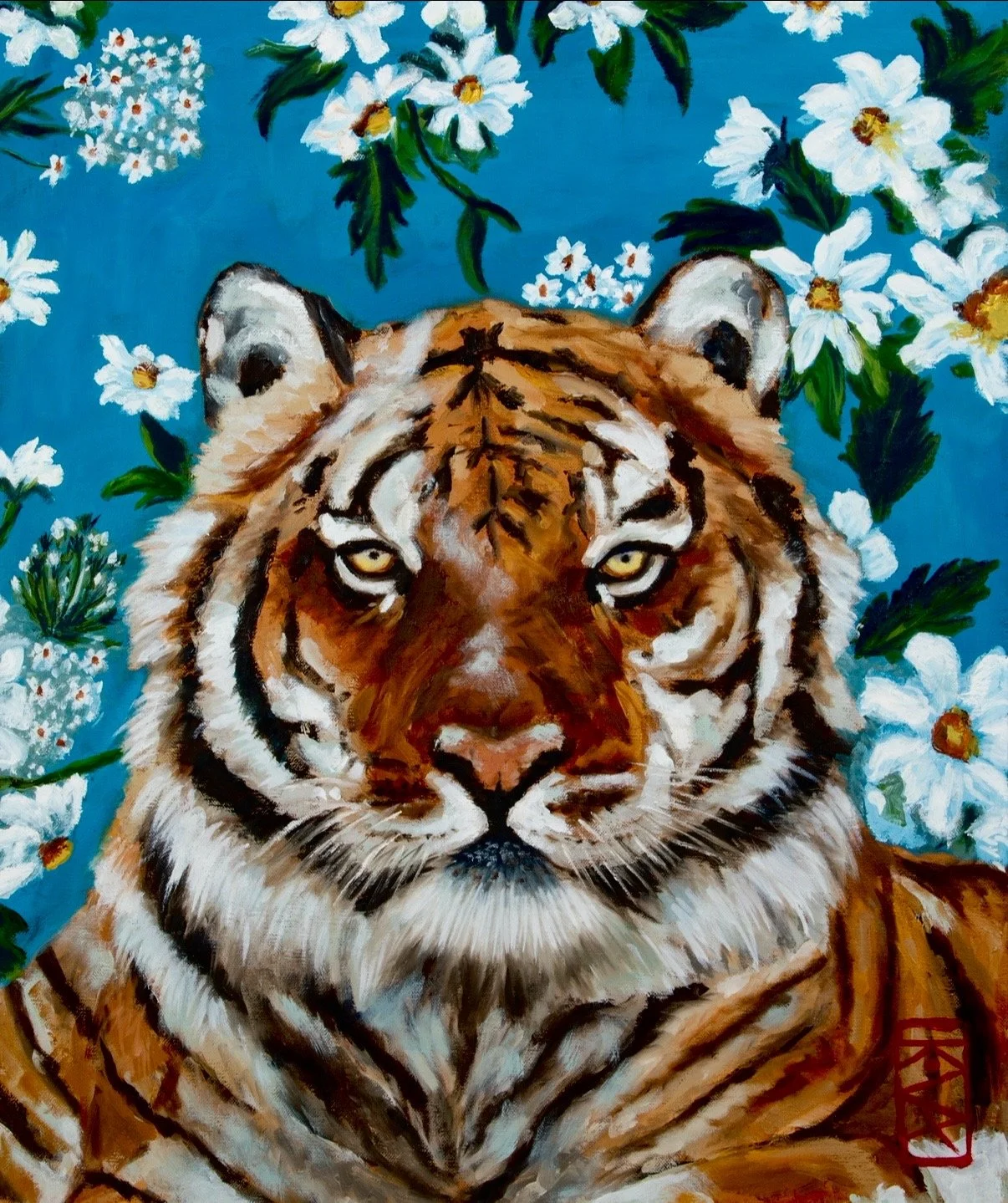
TIGER AND DAISIES (20 x 24 oil on canvas)
Born in the Year of the Tiger, the artist grew up feeling conflicted about her astrological sign—one traditionally associated with strength and dominance, qualities that were culturally perceived as unsuitable for a girl. This tension became intertwined with a family story often retold throughout her childhood. On the day of her birth, her father brought daisies to her mother, placed them in a vase, kissed her on the forehead, and left to meet his friends. The quiet brevity of the gesture lingered, leaving her mother to wonder whether his distance reflected disappointment at the birth of a daughter.
This painting revisits that inherited narrative and consciously reclaims it. The tiger and the daisies—once symbols of shame, restraint, and unspoken loss—are transformed into emblems of agency and self-possession. By rewriting the story through paint, the artist asserts strength as power rather than burden, and reframes tenderness and ferocity as forces that can coexist within a woman on her own terms.
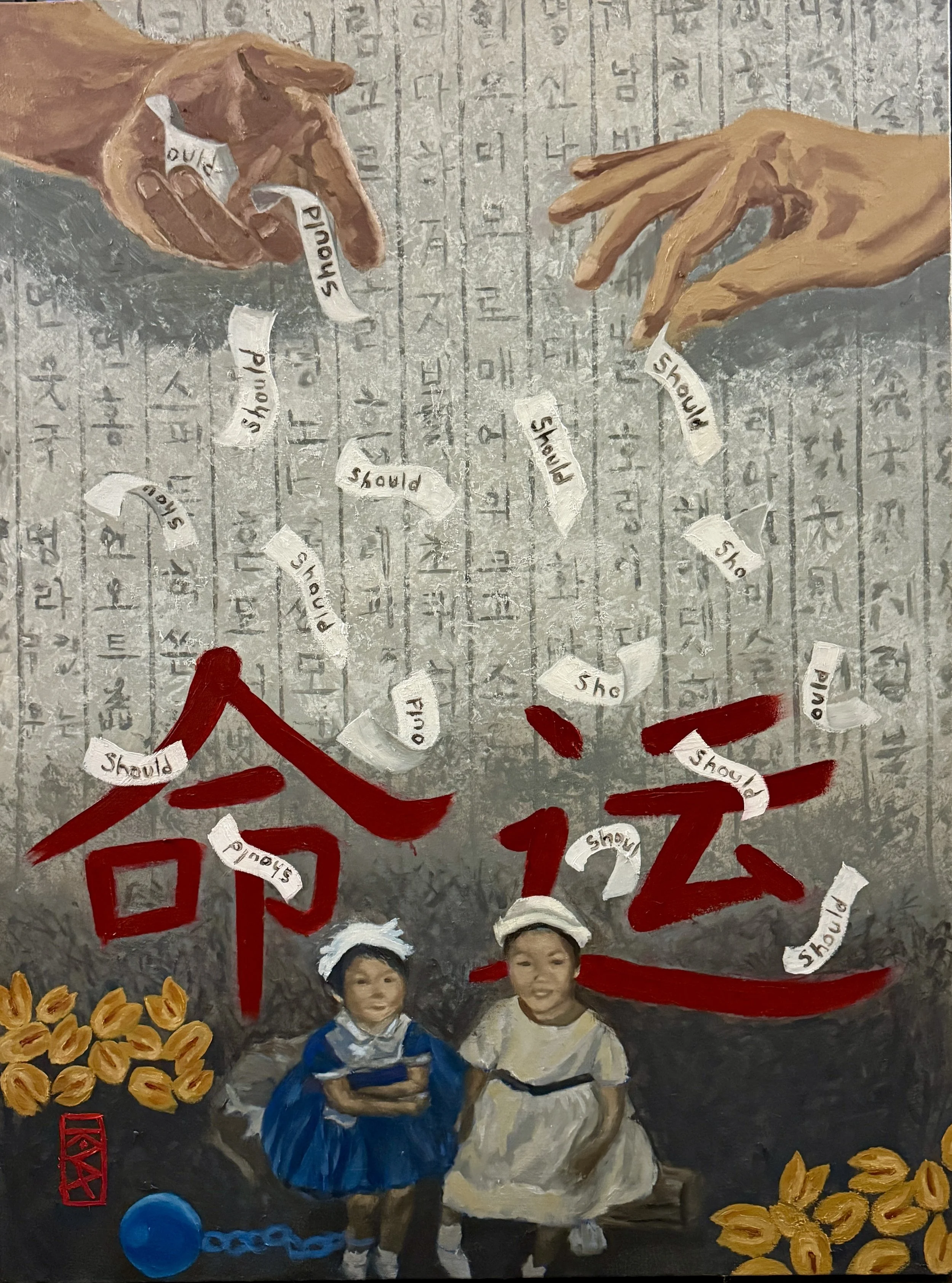
Get Rid of the “Shoulds” (30 x 40 oil on canvas)
Prompted by a friend’s advice to let go of her many “shoulds,” the artist arrived at a moment of profound self-recognition. She became aware of how deeply her life and her sister’s had been shaped by inherited expectations—what she should be as a daughter, a wife, a mother, and a woman. This realization led her into a process of inquiry, tracing the origins of these internalized directives and examining how they came to govern her sense of self.
Through this investigation, she recognized that many of these expectations were first learned within the home, particularly in patriarchal family structures. What struck her most was the subtlety with which such norms are transmitted. Women, often having accepted these cultural frameworks—even when they are harmful—can unconsciously reinforce and pass them on to their children. In the most ordinary moments of daily life, these beliefs are quietly woven into behavior, language, and routine, seamlessly shaping a child’s understanding of identity and possibility. This painting reflects that awakening, capturing the tension between inherited obligation and the emerging desire for self-definition.
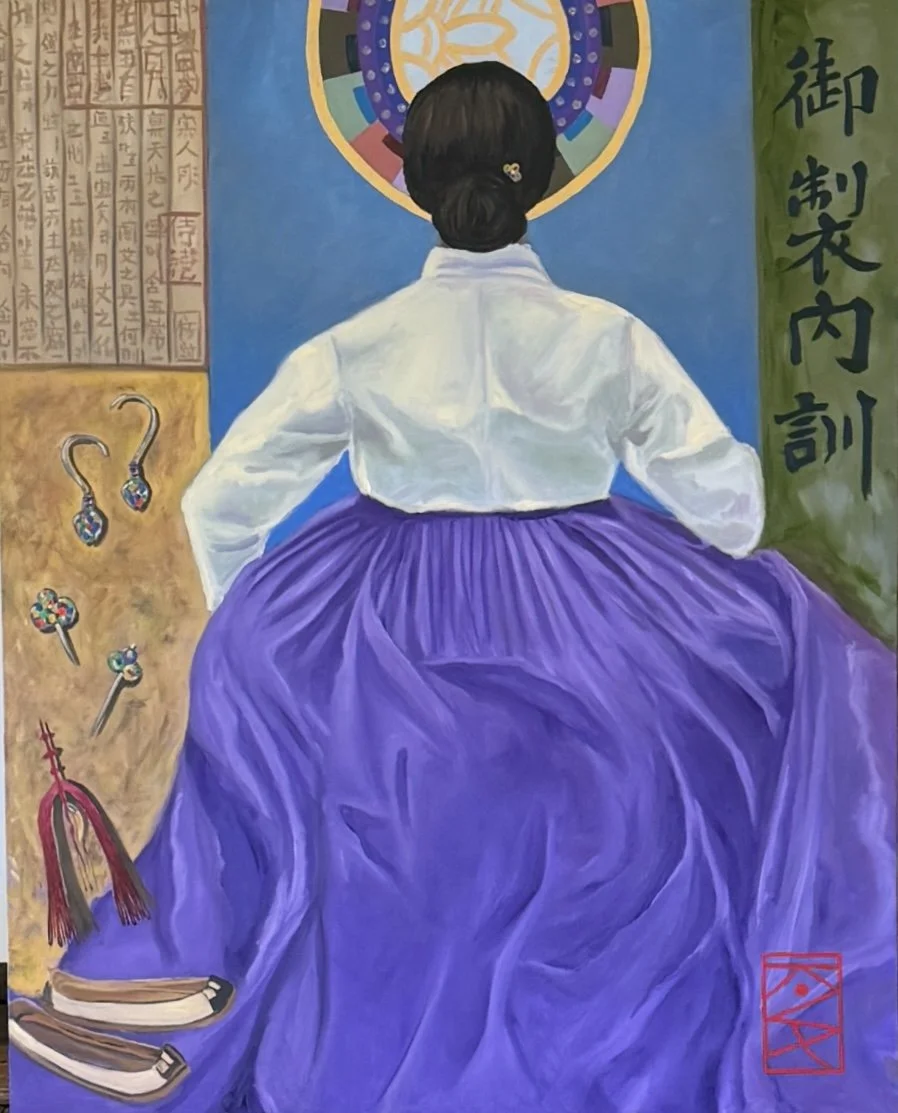
Between Two Pillars ( 48 x 60 Oil on canvas)
This painting centers on Naehun, a book written in 1475 by the Korean Queen Sohye that prescribed how women should think, behave, and exist within society. Rooted in Neo-Confucian ideals of premodern East Asia, the text reflects the historical construction of gender and sexuality, codifying expectations of female virtue, obedience, and restraint. In the upper left corner of the composition, a page from Naehun appears as a quiet yet authoritative presence—an enduring artifact of doctrine and control.
Beneath it rest objects of adornment—jewelry, shoes, and personal effects—symbols of femininity as it has been shaped, curated, and confined by social expectation. At the center of the painting, a woman stands with her back turned to the viewer, caught in motion as she runs toward a circular form that signifies freedom, wholeness, and self-determination.
Through this work, the artist invites viewers—particularly women—to confront inherited roles and prescribed identities, and to summon the courage to question them. The painting becomes an act of resistance and reflection, urging a reexamination of cultural narratives and an honest reckoning with which traditions serve one’s life, and which must be left behind.
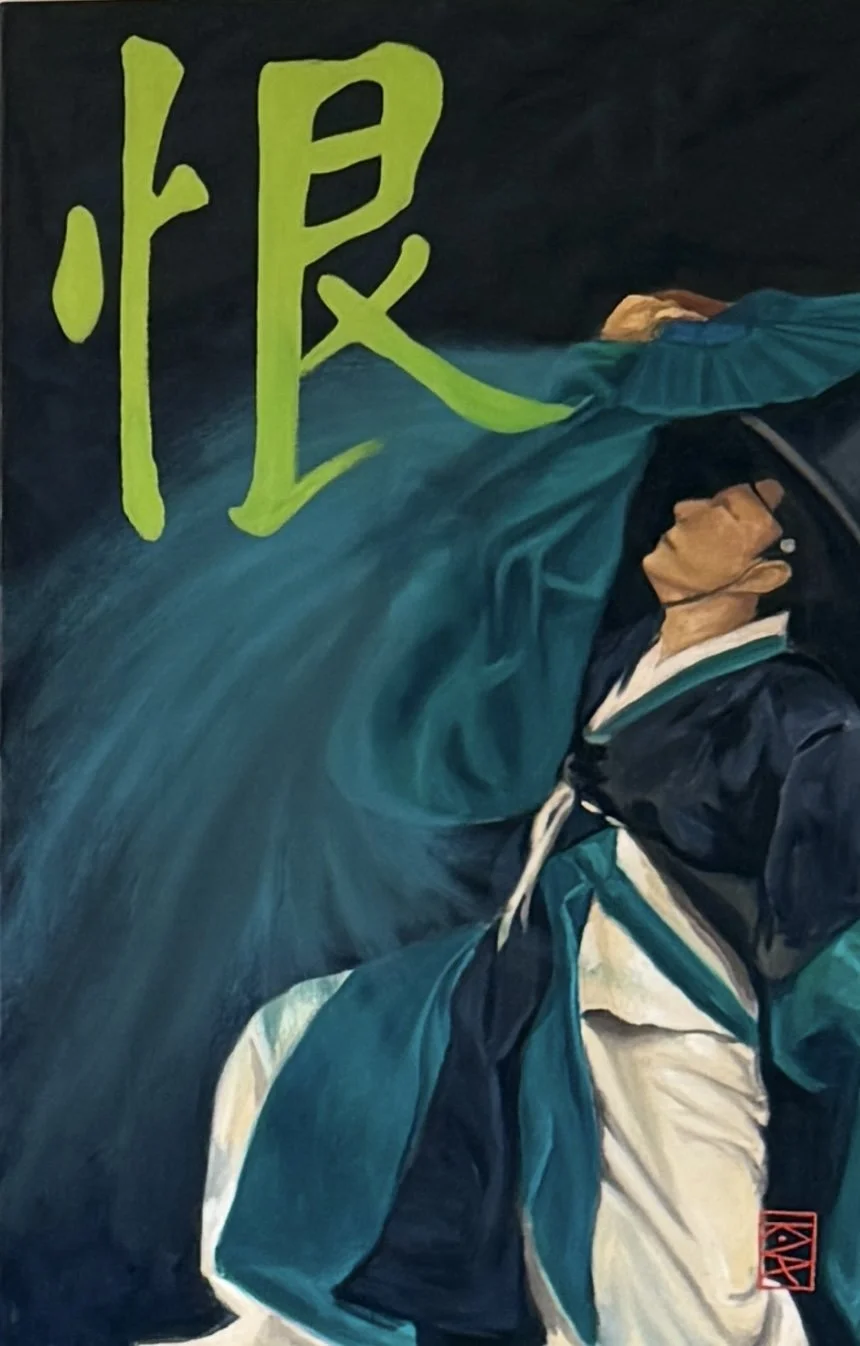
“Han”. (30 x 48 oil on canvas)
Titled Han, this painting is a dedication to the often-unspoken suffering of men within cultural systems shaped by rigid expectations. Han is a profound and central Korean concept, encompassing a layered emotional state of deep sorrow, suppressed anger, resentment, regret, and enduring grief—emotions born from historical trauma, injustice, and a sense of powerlessness.
Through this work, the artist expands the conversation around gender and suffering, acknowledging that the weight of prescribed roles is not borne by women alone. Men, too, are constrained by cultural demands that limit emotional expression, vulnerability, and self-definition. Han becomes both a personal and collective meditation, honoring the quiet endurance of those whose pain has been inherited, internalized, and carried forward across generations.
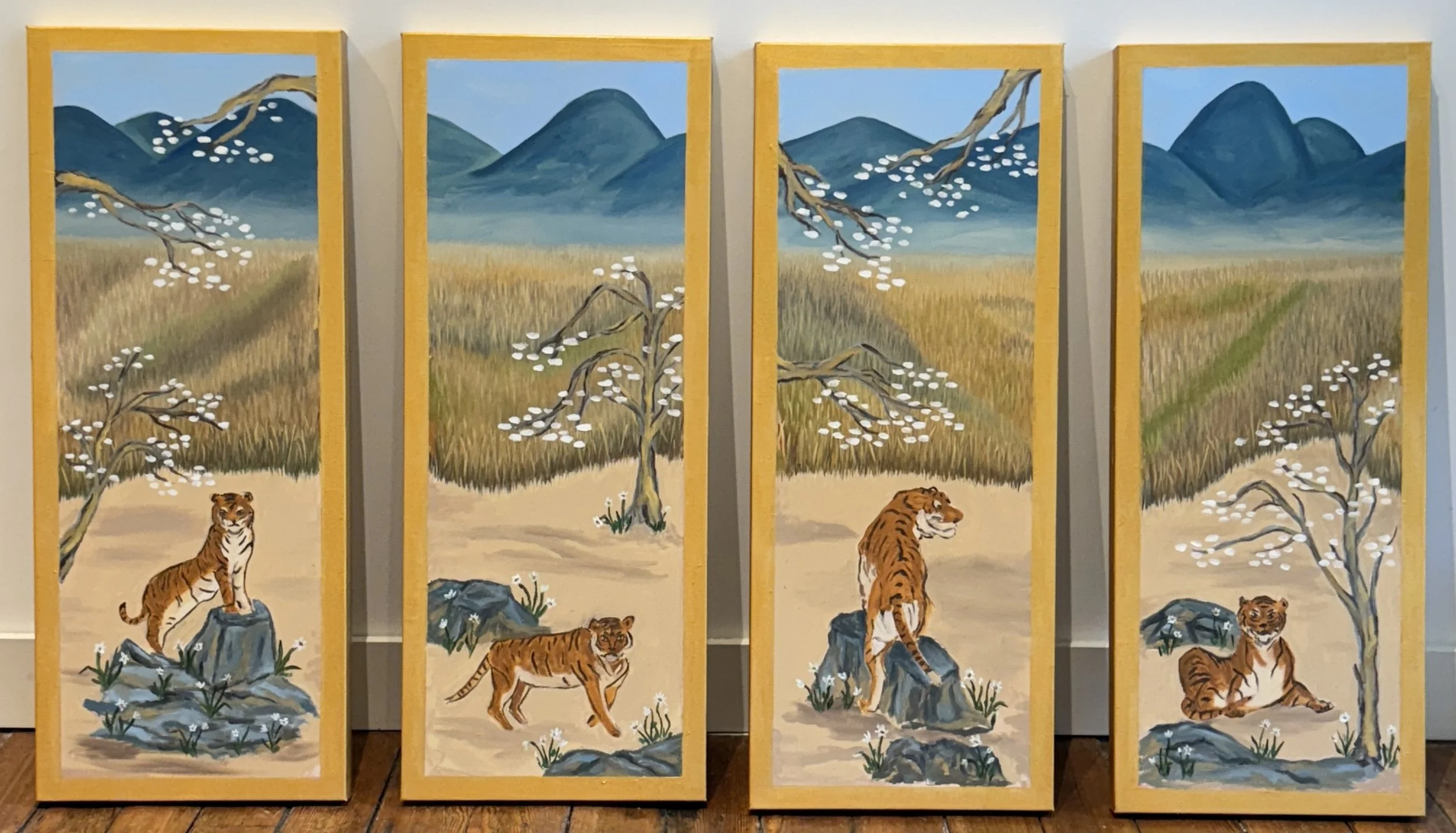
The Beast Beneath the Blue Ridge. (16 x 40 Polytch)
This polyptych serves as the concluding chapter of the exhibition’s narrative. Across each panel, the tiger appears at ease—playful, calm, and fully present—set against the rolling fields of Virginia and the familiar silhouette of the Blue Ridge Mountains. She is surrounded by daisies and rests among dogwood trees, symbols of both continuity and place.
Here, the tiger is no longer a figure of conflict or displacement. Instead, she exists in harmony with her environment, suggesting not mere survival but genuine flourishing. The landscape affirms a sense of arrival: a final home where strength and tenderness coexist, and where identity is no longer negotiated but embodied. This work offers a quiet resolution, asserting that belonging is not only possible, but can become a source of joy, rootedness, and peace.
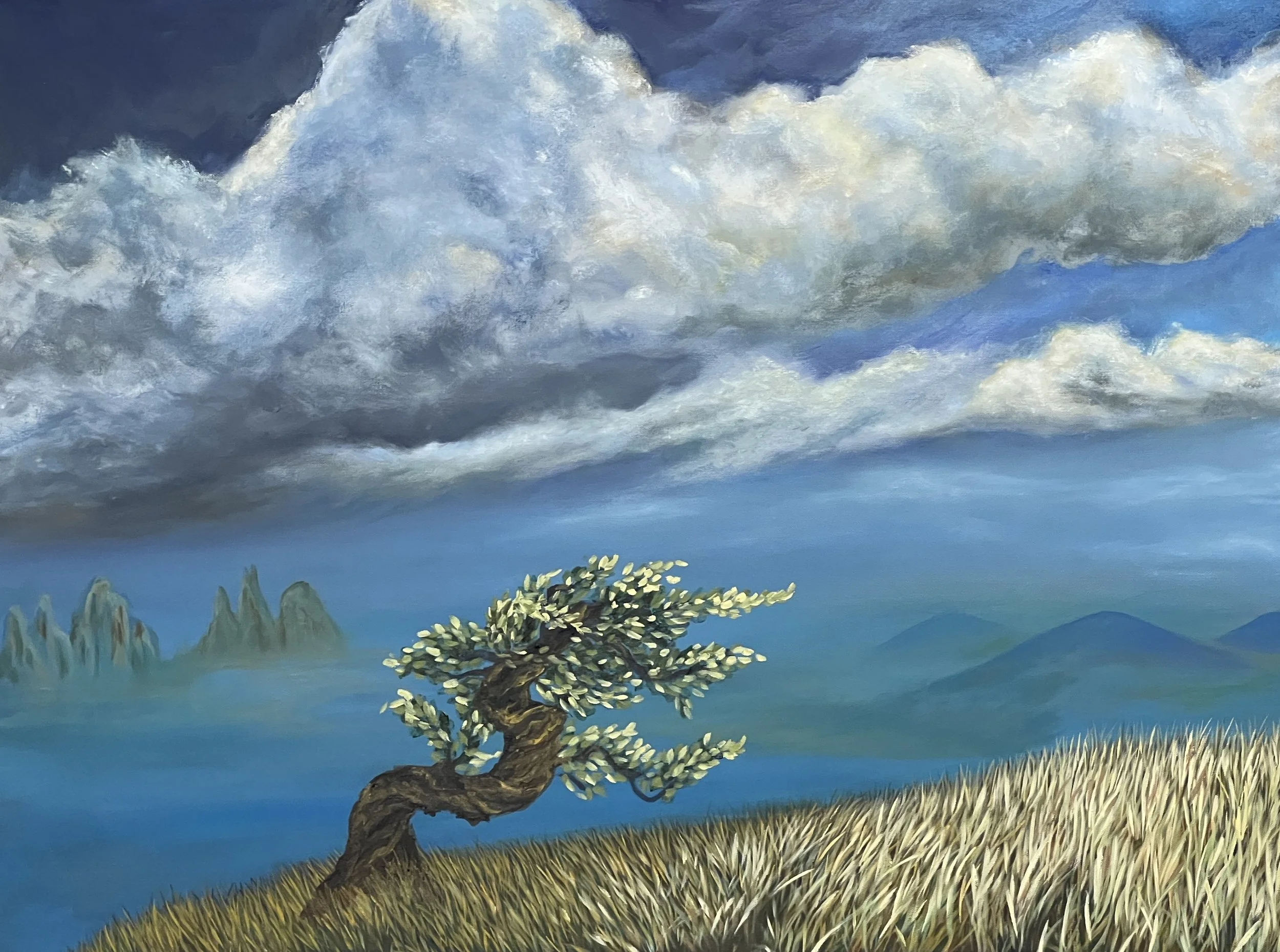
Bending to Belong (30 x 40 oil on canvas)
Bending to Belong is a meditation on the divided cultural existence shared by many immigrants. The composition is split both symbolically and visually: the sky is divided, and the landscape merges mountains from the East with the Blue Ridge Mountains, holding multiple geographies within a single frame. At the hilltop, a weathered, tortured tree leans toward the Blue Ridge, its posture echoed by the surrounding grass, as if shaped by winds blowing in that direction. Though its origins lie elsewhere, the land—and the life within it—gradually bends toward where it has taken root.
This leaning speaks to the slow, often conflicted process of building loyalty to a place that was not originally home, yet becomes so through time, responsibility, and love. The painting reflects the artist’s own realization that her deepest allegiance lies where she has been planted—where she has raised her children and built a life. While she continues to cherish her heritage and the cultural inheritance passed down by her parents, her sense of belonging is grounded in the place that shaped her adulthood and provided space to grow roots.
Through this work, the artist acknowledges the quiet compromises inherent in belonging. To belong is, in some way, to bend—sometimes willingly, sometimes painfully—while still struggling to preserve individuality and self-definition. Bending to Belong honors that tension, capturing the resilience and vulnerability of living between identities, landscapes, and loyalties.